Industrial pollution in the Calumet region
Blood ShotIndustrial pollution in the Calumet region is not a single disaster but an accumulated condition: generations of industrial use have left contaminated land and water, while the people living nearby face both environmental hazards and diminished economic prospects. The account links the region’s altered landscape to the industries that built it, then shows how contamination remains visible in damaged habitats and contested in local politics.
An industrial landscape built on filled marshes
The Calumet’s industrial character began with a deliberate transformation of its geography. More than a century before the events described, the Army Corps of Engineers and George Pullman began turning the marshes between Lake Calumet and Lake Michigan into an industrial center. Andrew Carnegie, Judge Gary, and other industrial barons contributed to the development over the following decades. An area roughly four miles square was filled with earth and clay dredged from Lake Calumet, as well as phenols, oils, ferrous sulfide, and countless other substances. The account’s catalogue makes the ground itself an industrial record: the region’s built environment rests on material deposited there for development and waste disposal alike.
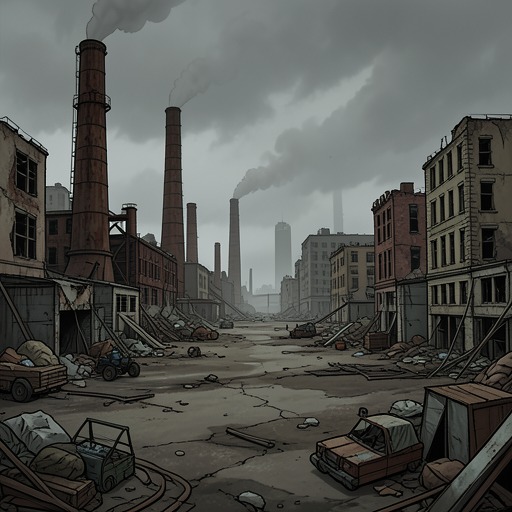
The contrast between the lakefront and the Calumet district makes that history legible as a change in place. Along Route 41, Lake Michigan and expensive high-rises give way abruptly at Seventy-ninth Street to the weed-choked yards of USX South Works, worn factories, landfill, and smoke-hung February air. Even with USX South Works on strike and Wisconsin Steel padlocked and rusting, a pungent chemical mixture enters a passing car through its vents and cracks, burning the eyes and sinuses. The smell persists despite industrial decline: closed or idle plants do not erase the environmental presence of the industries that once operated there.
That decline also has a social landscape. The old neighborhood’s bungalows show peeling paint, damaged siding, and sagging steps, yet their windows remain whole and their yards free of debris. The narrator recalls a time when 18,000 men left such homes each day for USX South Works, Wisconsin Steel, the Ford assembly plant, or the Xerxes plant, and when fresh paint and new cars marked a more prosperous rhythm. The comparison ties pollution to deindustrialization without treating the two as separate histories: the factories that supported employment also helped produce a damaged environment, and their retreat leaves the community with both industrial residue and economic loss.
Xerxes and the containment of industrial waste
The Xerxes plant stands in the heart of the former marsh at 110th Street east of Torrence. Its old building, dating from the early 1950s, carries a faded sign that once proclaimed it the King of Solvents. The plant’s U-shaped concrete-block structure backs onto the Calumet River. Its original arrangement allowed manufactured solvents to be shipped by barge and waste products to flow into the river, making the waterway part of the industrial system rather than a boundary protecting the surrounding community.
The Clean Water Act changed the plant’s waste-disposal practice, but the account presents containment as precarious rather than as a clean break with the past. Xerxes built large lagoons to hold its wastes, relying on clay walls as a barrier between the toxins and the river. The walls are described as an uncertain safeguard. Regulation has altered where waste is kept, but the hazardous material remains on site, and its security depends on containment holding.
The wider setting reinforces that uncertainty. After leaving the expressway at 103rd Street, the landscape appears almost devoid of ordinary signs of life: oily mud surrounds Lake Calumet, trees, grass, and birds are absent, and the only animals described are feral dogs. The description shifts attention from industrial buildings to the environments shaped around them. Pollution is not confined to a plant interior or a past discharge; it is encountered in the terrain through which residents and workers move.
Dead Stick Pond and the persistence of harm
Dead Stick Pond, an overflow of the Calumet River, brings the consequences of contamination into especially stark focus. Conflicting signs mark the area as both a federal clean-water project and a place where hazardous wastes threaten trespassers. A low wire fence has fallen in several places, leaving the boundary easy to cross. The signs and broken barrier express a tension between official designation and lived conditions: the place is subject to environmental attention, yet its hazards are not effectively separated from people who enter it.
The pond had once been a feeding ground for migrating birds. Now its water is dull black, and bare tree stumps protrude from the surface. Fish have returned to the Calumet River and its tributaries since the Clean Water Act, but fish entering the pond are found with massive tumors and rotted fins. A fishing couple nonetheless tries to find dinner in the polluted water. Their presence makes the contamination a matter of everyday exposure and need, not simply a distant ecological measure. The account does not describe the couple’s circumstances beyond their attempt to fish, but the contrast between visibly damaged fish and their search for food gives the scene its force.
Community action and unequal power
Environmental harm also shapes local political disputes. Caroline Djiak describes a proposed solvent-recycling plant that had funding, a site, and specifications that had passed the tests she and her colleagues could identify at the U.S. Environmental Protection Agency. Xerxes and Glow-Rite were potential nearby customers. The proposal promised about a hundred local jobs as well as a way to reduce waste entering the ground. Recycling is presented as a practical response to an existing industrial burden, one that joins employment with an attempt to limit further contamination.
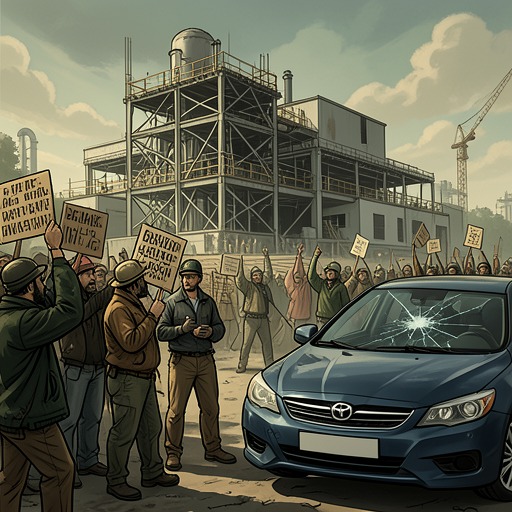
The proposal was denied a hearing after its supporters arrived to find it missing from the zoning-board agenda. The board’s explanation was that the plan lacked community backing. Nancy Cleghorn said that she had been ready to present petitions and that the board chairman then claimed to have heard from people who opposed the project. The dispute places public participation at the center of environmental decision-making: the group says it had community support, but that support is challenged without the hearing in which its evidence could be presented. The account does not establish who engineered the obstruction, but it raises the possibility of political connections as Caroline points to the chairman’s ties to established Democratic politicians.
The limits of community influence are sharpened by earlier threats against Caroline and Nancy for opposing Steve Dresberg’s proposed PCB incinerator. They had testified that they received death threats; Caroline later acknowledged that she had not told the police this when Nancy’s murder was under investigation. The threats connect environmental campaigning to personal danger, while the alleged sweetheart deal with the Sanitary District suggests that formal testimony can be ignored when political interests prevail. Across the region’s industrial history, the failed recycling proposal, and the hazards at Dead Stick Pond, pollution is both a physical inheritance and a struggle over whose evidence and interests count. The people living amid the damage are asked to bear its consequences while trying to secure jobs, safer practices, and a meaningful voice in decisions about their own surroundings.